
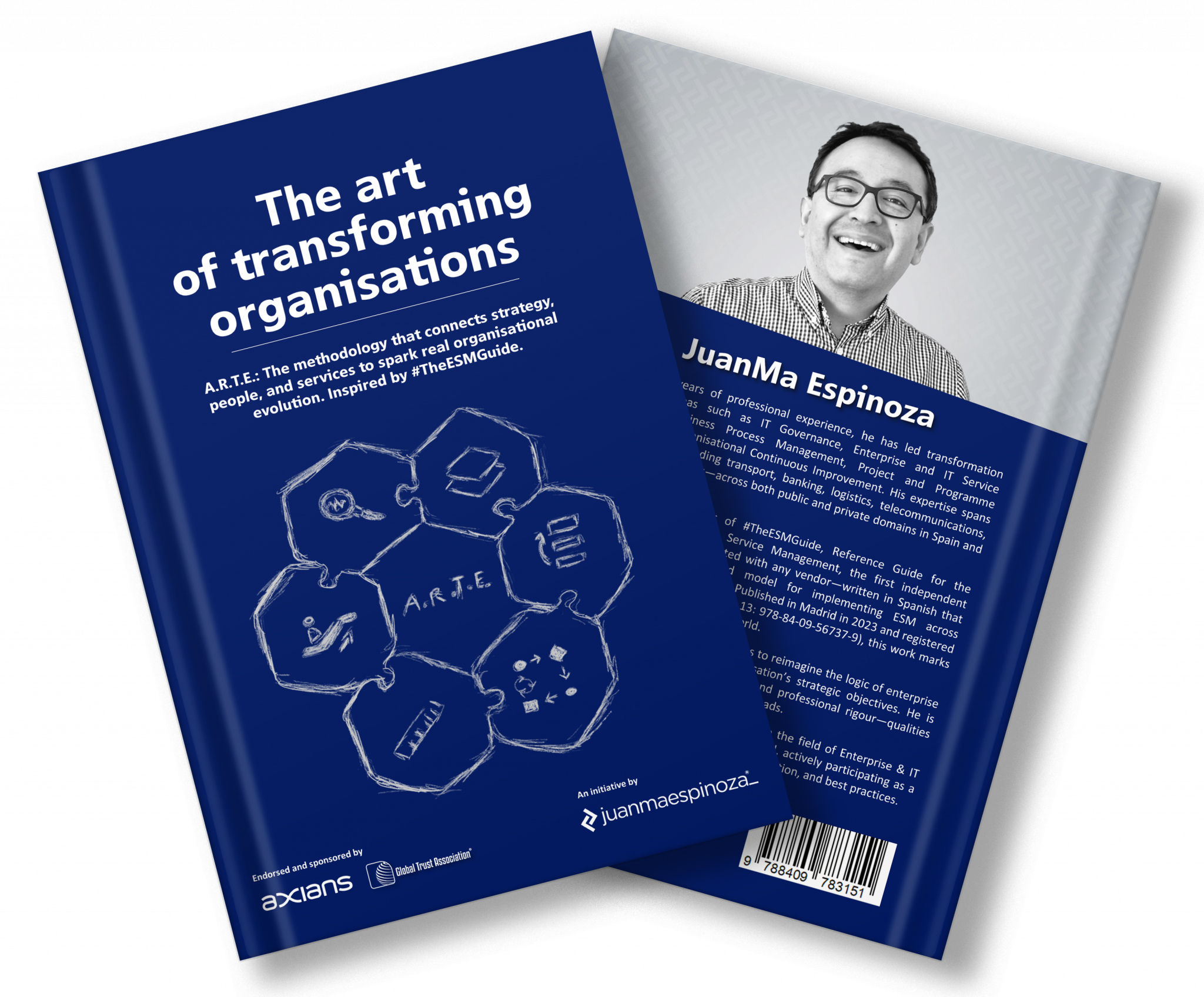
The art of transforming organisations
Purchase This Book At:

Description
Organisational transformation in complex and rapidly changing environments requires far more than technological tools or isolated processimprovements. It demands an integrated logic that connects strategy, people, culture, and services under a coherent and adaptable framework. In thiscontext, the A.R.T.E. methodology (Adaptive, Robust, Transversal, and Expandable) emerges as a unique professional approach to enable real,sustainable organisational evolution focused on value.
Inspired by the conceptual framework of #TheESMGuide, A.R.T.E. provides a structured roadmapthat combines technical rigour with human sensitivity. Its premise is simple yet powerful: transformation is not imposed; it is co-created. Themethodology unfolds through six key phases designed to deliver impact with clarity and rhythm:
1.- Strategic Discovery, to understand before actingthrough context analysis, interviews, and maturity assessment.
2.- Management Architecture Design, defining the master plan that connectsgovernance, services, processes, and operating models.
3.- Co-creation and Prioritisation, turning strategy into shared action and activatingorganisational commitment.
4.- Iterative Implementation, with short cycles that deliver value early and avoid “analysis paralysis.”
5.- Measurement andOptimisation, validating results, enabling continuous improvement, and fostering cultural evolution.
6.- Scaling and Evolution, transforming changeinto competitive advantage and embedding it into organisational DNA.
Unlike traditional approaches, A.R.T.E. does not compete with frameworks suchas ITIL, COBIT, Lean, or Agile; it integrates them and places them at the service of a higher logic. Its design is modular, flexible, and deeply connected tothe client’s reality, preventing common mistakes such as automating without redesigning, scaling without measuring, or transforming without acompelling narrative. Furthermore, it incorporates guiding principles that ensure coherence: people-centred value, transparency in decision-making,modularity with global vision, technology as an enabler—not an end—and shared storytelling as a driver of adoption.
The impact of A.R.T.E. translatesinto tangible results: increased operational efficiency, improved service quality, cost optimisation, activation of collaborative culture, and strengthenedorganisational resilience. Real-world cases across sectors such as public administration, healthcare, education, industry, telecommunications, banking,and technology demonstrate its applicability and versatility, consolidating it as a reference methodology for leaders seeking to evolve theirmanagement models towards integrated, sustainable, and value-driven frameworks.
In essence, A.R.T.E. is not just a methodology—it is anorganisational transformation logic that unites strategy, governance, culture, and technology within a shared narrative. It enables organisations totransform with method, vision, and humanity, turning management into a competitive advantage and evolution into a continuous practice.
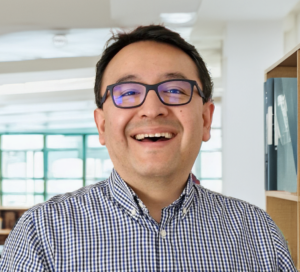
Juan-Manuel Espinoza is a leading figure in organisational transformation and enterprise service management. With over 20 years of experiencedriving strategic initiatives across Europe and Latin America, he has established his career as Head of Service Transformation at Axians Spain, where hepromotes innovative governance and management models that integrate technology, culture, and organisational narrative.
Author of #TheESMGuideand creator of the A.R.T.E. methodology, Juan-Manuel has designed the first structured approach that connects strategy, Enterprise ServiceManagement (ESM), corporate culture, and technology under an adaptive, robust, transversal, and expandable logic. His methodological proposal notonly redefines traditional consultancy but also introduces a holistic vision that strengthens organisational resilience and competitiveness.
In addition tohis consulting work, Juan-Manuel is an international speaker and a driving force behind initiatives that position service management as a strategic pillarfor digital transformation. His book, “The Art of Transforming Organisations”, presented in 2025, has become a reference for leaders seeking to evolvetheir management models towards a more integrated and sustainable logic.
